

Current Events
FinTech Days 2026 (Wien)
The FinTech Days will take place on 25 and 26 February 2026 at WU Vienna. Professor Katja Langenbucher will give a presentation on the centralisation of financial market supervision, addressing current developments and reform perspectives in European financial regulation.
More information is available here.
IMFS Conference „Independence of Central Banks and Financial Supervisors“ (Frankfurt am Main)
On 12 and 13 February 2026, the Institute for Monetary and Financial Stability (IMFS) at Goethe University Frankfurt hosts an international conference on the independence of central banks and financial supervisors. Professor Katja Langenbucher will co-open the conference and chair several panels.
More information is available here.
JuLIA Final Conference (Brüssel)
The final conference of the JuLIA project will take place in Brussels on 22 and 23 January 2026. Professor Katja Langenbucher will contribute with a presentation.
More information on the JuLIA-Project is available here.
International Symposium on Comparative Corporate and Capital Markets Law (Tokyo)
On 11 December 2025, Professor Katja Langenbucher participated in an international symposium on comparative corporate and capital markets law at Waseda University in Tokyo.
More information is available here.
New Working Paper Published
A new working paper by Prof. Howell E. Jackson and Prof. Katja Langenbucher, titled “The Regulation of Technological Innovation in Financial Services: A Comparative Approach with Respect to Digital Assets and Artificial Intelligence", has been published on SSRN.
More information and the full text are available here.
The Oxford Handbook of Law and Management
The forthcoming Oxford Handbook of Law and Management (Oxford University Press) will include a chapter by Professor Katja Langenbucher entitled “Groupthink and the Law: Shaping, Nudging, Enabling” (Chapter 27). Her contribution explores how legal frameworks can shape and influence group dynamics in financial markets.
Further information on the handbook is available here.
19th ECFR Symposium 26 September 2025 | Goethe University Frankfurt & via Zoom
Webinar “AI in Credit Scoring” with Prof. Dr. Katja Langenbucher – 15 September 2025 (online)
ECGI Conversation Series Interview with Katja Langenbucher
Better Boards Podcast
In the latest episode of the Better Boards Podcast, Professor Katja Langenbucher and the host discuss how boards of directors can responsibly handle the use of Artificial Intelligence (AI). A key focus is the so-called “black box" problem: many AI systems deliver results without making the decision-making process transparent — a critical issue for board members who are legally liable. The podcast explores how AI can serve as a supportive tool without replacing human judgment and introduces an “AI Readiness Questionnaire" designed to help assess an organization's maturity in dealing with AI.
The full conversation will be available here from May 15, 2025.
Cleary Gottlieb Law Prize 2025 for Katja Langenbucher's ECGI Paper
We are pleased to announce that Prof. Dr Katja Langenbucher has been awarded the Cleary Gottlieb Law Prize worth EUR 5,000 for the Best Paper in the ECGI Law Working Paper Series 2024 for her publication 'Ownership and Trust: A corporate law framework for board decision-making in the age of AI'.
You can access the now award-winning publication here.
Based on this award ECGI conducted an interview with Prof. Langenbucher which explores how boards can responsibly integrate AI into their decision-making processes:
_________________________________________________________________________
AI & Board Decision-Making
What key safeguards should boards have in place when using AI as
a decision-support tool?
A board must address two key questions: Which AI to
use?, and What should it do? The first question involves “AI-due
diligence". Most firms will not build their own AI but purchase a (narrow or
foundation) model from a commercial provider, finetuning it with the firm's own
data. While selecting a reputable model provider is important, the latter step
is core: The board is in a unique position to evaluate how well structured,
reliable, relevant and unbiased the firm's data is.
The second question requires the board to define the AI's intended purpose. In the paper, I give
examples such as predicting the share price for an IPO or moving from
brick-and-mortar bank branches online. Each use case presents distinct
challenges. To determine what AI can and cannot do for them, board members must
engage in dialogue with technical experts who explain potential limitations and
risks of the AI's contribution.
The Role of Explainability in AI Governance
Your paper challenges the idea that black-box AI should be
excluded from board decision-making. How important is AI explainability for
board decision-making? Should boards be required to understand AI decision
processes, or is outcome reliability more relevant?
Black-box AI can seem intimidating. However, it is important to
remember that managing risk and uncertainty is a core responsibility of the
board. They routinely evaluate known unknowns. Upon closer examination,
much depends on the context of the board decision. Does a model such as
Alphafold inspire the board to invest in a new drug? Understanding each step
might be less important than assessing sunk costs should the model's prediction
be wrong. This is different if the board asks how a judge will decide a complex
legal matter in various jurisdictions. Methods of explainable AI, such as LIME,
SHAP or DiCE, are valuable as they help the board gauge the reliability of
outcomes. However, any AI prediction is a function of both,
model and data. Explainability tools might ultimately be less
important than the quality of the data and an understanding of the limitations
of AI's legal reasoning capabilities.
Ownership vs. Trust in AI-Augmented Boards
You propose a framework where judicial review varies depending
on the balance of ownership and trust. How can boards ensure they
"own" decisions while leveraging AI's predictive capabilities?
What I call ownership implies that a board may not
abdicate its authority. Stories you might find online about boards deferring
their decision-making to the suggestions of a quirky robot-AI fall into this
category. More importantly, ownership requires boards to take on
accountability for their decision-making vis-à-vis shareholders. To
truly own a decision that incorporates an unexpected or surprising AI
prediction, the board must understand the differences between human cognition
and the inner workings of an AI. AIs are “induction machines" that recognize
recurring patterns in historical data. Humans are conceptual thinkers. They
build hypotheses and seek to establish causality. Good strategic board
decisions are a combination of both approaches. The AI provides input, serves
as a sounding board or challenges group-think among board members. Humans
leverage theory-driven reasoning to identify and scrutinize novel business
opportunities. Ultimately, it may be a unique, firm-specific strength that
produces a lasting competitive edge.
Regulatory Implications & Global Variations
Do you see significant differences in how U.S., EU, and other
jurisdictions regulate AI in corporate governance? How might emerging AI
regulations shape future board responsibilities?
There are significant differences in global approaches to
regulating AI. President Trump's 2025 Executive Order emphasizes fostering AI
development with minimal government interference, except for sectoral
regulation such as finance or health. Some U.S. states have introduced their
own AI laws. China adopts a closely monitored, centralized approach featuring
mandatory ethics committees, algorithm accountability, and data privacy laws.
The EU has passed the AI Act, which applies a risk-based approach across all
sectors, tailoring compliance requirements to risk-levels of AI use cases. The
UK is in the process of designing laws that combine elements of both,
principle- and rule-based approaches. While AI in corporate governance has not
yet been the direct focus of regulation, firms now face a complex array of global
laws. For boards, this results in an unwelcome increase in compliance
responsibilities. At the same time, regulatory competition between
jurisdictions offers opportunities to select the most business-friendly
environment.
Looking Ahead: AI & the Future of Corporate Law
As AI becomes more integrated into corporate strategy, what key
legal and governance challenges do you anticipate in the next five years?
I distinguish between two types of board decisions. Type 1 decisions structure the use of AI by officers and employees, type 2 decisions concern the integration of AI into core board decision-making. Type 1-governance is primarily about if and how to use an AI. The if question identifies a value proposition: Does the firm have suitable data and employee skillsets, can it cope with error costs? The how question concerns the choice between execution-only, fully autonomous or human-cooperating AI. Legal challenges include oversight duties related to employment, data privacy, and securities law. For type 2 decisions, I anticipate two focus areas: Especially in regulated industries, firms and supervisors will discuss AI's role in risk management. Across industries, boards will consider the business judgment rule's requirement to be reasonably informed. Shareholders might be just as critical of a board's overreliance on AI as of a board that fails to use AI.
5th Transnational Training Event
Professor Katja Langenbucher participated in the 5th Transnational Training Event at Pompeu Fabra University in Barcelona on February 14, 2025. The event focused on topics related to artificial intelligence in the context of judicial dialogue and consumer protection in individual and mass litigation. The lecture by Professor Katja Langenbucher is titled 'AI Credit Underwriting and Scoring – Inclusion or Discrimination?'.
The event was recorded. The lecture by Professor Katja Langenbucher can be accessed here.
Financial Profiling
Professor Katja Langenbucher published a blog post on March 26, 2025, on the website of Oxford University in the blog of the Faculty of Law. In the post, she discusses the connections between Financial Profiling and the possibilities of modern AI systems.She outlines the legal framework for various practices in her post.
The full post can be accessed here.
Explaining Credit Scores – The ECJ Rules on Automated Credit Assessments
Prof. Katja Langenbucher
and Prof. Dr. Kevin Bauer have published a blog post on the website of NYU - “Program on Corporate Compliance and Enforcement," in which they
explain the European Court of Justice (ECJ) ruling from February 2025 regarding
SCHUFA and its credit scoring process. The post provides a detailed overview of
the new ECJ requirements, which demand greater transparency in the calculation
of credit ratings, and highlights the practical implications of this decision.
The full post can be accessed here.
Bridging the Pond: Navigating the Waters Between American and EU Business Law
G7 High Level of Experts Report on Artificial Intelligence and Economic and Financial Policy Making
As part of a panel of high-level experts on artificial intelligence in the economic and financial sector, Prof Katja Langenbucher contributed to the development of a report on ‘Artificial Intelligence and Economic and Financial Policy Making’, which was published under the G7 presidency of Italy.
The press release as well as the report can be obtained here.
EBSL – BLEST Conference 2024 QUO VADIS, EU (LAW)? 4th edition
Prof. Katja Langenbucher will be speaking on November 29, 2024, at 9:30 AM as part of Panel 3 on the topic: AI in Finance: Transforming the Future of the Financial Sector.
You can find more information about the program here.
Lecture Series: Trust and Knowledge, Institute of Philosophy - TU Darmstadt
Further information can be found here.
10th FinTech Conference, University of Luxembourg
On 3 October 2024, Katja Langenbucher will be part of a panel alongside Nydia Remolina Leon (SMU Singapore) and Michel Birger (Crédit Agricole) talking about relevant topics around market infrastructure, payments and innovation. This panel is part ob the 10th FinTech Conference hosted by the Faculty of Law, Economics and Finance of the University of Luxembourg.
Further information can be found here.
Council of Europe AI Treaty about to be signed
On 5 September 2024, various countries and the European Union, will sign the first international legally binding treaty adopted by the Council of Europe on 17 May 2024, which aims to ensure respect for human rights, the rule of law and democratic legal standards in the use of artificial intelligence (AI) systems.
Further information can be found here.
"Quo Vadis - Risikomanagement der Bank in Zeiten des Umbruchs"
In the course of the "Quo Vadis - Risikomanagement der Bank in Zeiten des Umbruchs" August 28, 2024 in Zurich Katja Langenbucher will speak about the “Risks of Artificial Intelligence”.
Further informationen can be obtained here.
11th German-French Symposium on Company Law und Capital Markets Law
Katja Langenbucher will be part of the 11th German-French Symposium on Company Law and Capital Markets Law taking place in Hamburg on July 4-5, 2024, where she will talk about "Financial Profiling".
Further informationen can be obtained here.
Harvard-Hamburg Conferences on New Approaches to Legal Reasoning: "Conference on Reasoning about Civil Law, Common Law, and Beyond"
In the course of the "Conference on Reasoning about Civil Law, Common Law, and Beyond" of the 2nd Edition of the Harvard-Hamburg Conferences on New Approaches to Legal Reasoning on June 17th, 2024 Katja Langenbucher will speak about "The Power of Economic Transplants - Common Law, Civil Law, and Beyond".
More information can be obtained here.
C³S Workshop: "Understanding Ownership: The impact of AI in Law, Medicine, and Art"
The C³S in collaboration with Katja Langenbucher and Kevin Bauer will host a workshop on 3 July, 2024 from 9:30am to 17:45pm on the topic: "Understanding Ownership: The impact of AI in Law, Medicine, and Art - Exploring Humain AI Interaction in the age of generative models".
The Workshop will be held at the Campus Westend, House of Finance, Goethe-University (Room E.22 - Commerzbank).
ECGI Working Paper Series No. 763/2024: "Insider Trading in European Law - from financial instruments to crypto-assets"
Recently, the European Corporate Governance Institute published a new article from Katja Langenbucher about "Insider Trading in European Law - from financial instruments to crypto-assets"
The article can be accessed here.
ECGI Working Paper Series No. 758/2024: "Ownership and Trust - A corporate law framework for board decision-making in the age of AI"
Recently, the European Corporate Governance Institute published a new article from Katja Langenbucher about "Ownership and Trust - A corporate law framework for board decision-making in the age of AI"
The article can be accessed here.
NYU Blogpost: "The European Court of Justice Tightens the Requirements for Credit Scoring under the GDPR"
Katja Langenbucher has written a blog post on the ECJ's Schufa ruling. In it, she analyzes the decision, draws comparisons with US law and provides an outlook on upcoming European regulatory projects on credit scoring.
The blog post was published in the Compliance & Enforcement Blog of NYU Law School and can be accessed here.
NYU Blogpost: "High Fines Might Become the New Normal"
An article from Katja Langenbucher regarding a recent decision of the Irish Data Protection Commission and its impact on EU-US data transfers has been published on the Compliance & Enforcment blog of the New York University School of Law (NYU). The article "Explaining MiCA: Part of the EU's Approach to Crypto and Digital Asset Regulation" can be found here.
OBLB: "Consumer Credit in The Age of AI - Beyond Anti-Discrimination Law"
An article from Katja Langenbucher on AI Credit Scoring has been published on the Oxford Business Law Blog of the University of Oxford. The article "Consumer Credit in The Age of AI - Beyond Anti-Discrimination Law" can be found here.
NYU Blogpost: "Explaining MiCA: Part of the EU’s Approach to Crypto and Digital Asset Regulation"
An article from Katja Langenbucher on recent regulatory developments on crypto and digital assets in Europe has been published on the Compliance & Enforcment blog of the New York University School of Law (NYU). The article "Explaining MiCA: Part of the EU's Approach to Crypto and Digital Asset Regulation" can be found here.
February 10th, 2023 "Web3: What don't we know about it yet?"
The Berkman-Klein Center at the Harvard Law School and the Mosavvar-Rahmani Center for Business and Government at the Harvard Kennedy School of Government are hosting a workshop about Web 3.0 technologies, digital assets and their implications on the global society and economy on Februrary 10th, 2023, 9:30am to 3pm.
Katja Langenbucher will join the panel to give an insightful overview about how goverments are getting ready for digital assets.
For more information click here.
NYU Blogpost: "Regulating AI - The Next 'Brussels Effect'?"
An article from Katja Langenbucher on recent regulatory developments on AI in Europe has been published on the Compliance & Enforcment blog of the New York University School of Law (NYU). The article "Regulating AI - The Next 'Brussels Effect'?" can be found here.
Working Paper: "Consumer Credit in The Age of AI – Beyond Anti-Discrimination Law"
Katja Langenbucher's recently published working paper with the title "Consumer Credit in The Age of AI - Beyond Anti-Discrimination Law" can be found here.
2022 conference on "Sustainability in Commercial and Financial Law
On Wednesday, 9 November from 14.00 to 18.00 pm, the "Society of Commercial and Financial Law" will host a conference on "Sustainability in Commercial and Financial Law". The conference will take place in Zurich, at the University of Zurich (Aula Magna, KOL-G-201), and cover sustainability in the area of commercial and financial law. Prof Dr Katja Langenbucher will act as the plenary speaker at this conference.
Please note that a registration for this event will be required. To register and to receive further information, please click here.
Article: "Artificial Intelligence and the “S” in ESG?"
The
recently published article by Katja Langenbucher in the ecgi blog with
the title "Artificial Intelligence and the “S” in ESG" can be found here.
Article: "Did the German stakeholder model fail in Wirecard and Volkswagen?"
The
recently published article by Katja Langenbucher in the ecgi blog with
the title "Did the German stakeholder model fail in Wirecard and Volkswagen?" can be found here.
Conference "Regulating AI in a Democracy"
On Tuesday, June 7, the Law School of Sciences Po will host a conference on "Regulating AI in a Democracy". The conference will take place in Paris and will look at the EU Draft AI Act from an interdisciplinary and critical perspective. As part of this conference, Katja Langenbucher will speak on "Regulating AI - Perspectives from Finance and Law" from 14.00 to 15.30 pm.
Please note that a registration for this event is required until May 30, 2022. To register and to receive further information, please click here.
Save the date: SAFE "LawLab - Fintech & AI" Workshop
On Monday, June 27th 2022 from 3.00 to 5.00 pm, the SAFE "LawLab - Fintech & AI" online-Workshop on the paper "Predictably Unequal. The Effects of Machine Learning on Credit Markets" takes place. An introduction by Katja Langenbucher will be followed by a presentation by one of the paper's authors, Ansgar Walther (Imperial College London), and comments by Talia Gillis (Columbia Law School), Aislinn Kelly-Lyth and Jeremias Adams-Prassl (Faculty of Law, University of Oxford).
Please note that a registration for this event is required. To register and to receive further information, please click here.
Save the date: SAFE Fintech Policy Lecture "FinTech and CBDC"
On Thursday, June 2th 2022, the SAFE Fintech Policy Lecture on "FinTech and CBDC" takes place. In the context of this event, Katja Langenbucher and other practitioners and researchers will take a closer look at the new developments surrounding FinTech and CBDC and examine their effects and consequences.
Please note that a registration for this event is required. To register and to receive further information, please click here.
Save the date: Opportunities and Risks of Digital Transformation in Finance and Beyond - Conference
On Thursday, June 2th, and Friday, June 3rd 2022, Katja Langenbucher and associated ZEVEDI researchers will host a two-day conference titled "Opportunities and Risks of Digital Transformation in Finance and Beyond." This virtual panel and conference will bring together renowned experts to discuss the latest research and case studies on the opportunities and risks of digital transformation in finance and beyond.
Please find further information on this flyer.
SAFE-LawFin Policy Workshop: Pacemaker Brussels?
On Tuesday, December 7th 2021 at 5.00 p.m. (CET), the Leibniz Institute SAFE and the Center for Advanced Studies on the Foundations of Law and Finance (LawFin) will host an online workshop on "Pacemaker Brussels?". Prof. Langenbucher will participate in this workshop and moderate the subsequent discussion.
For more information, especially on how to register for this workshop, please visit the following link.
Online-Event: Network for Artificial Intelligence & Law (NAIL)
On Monday, December 6th 2021 at 6.00 p.m., Katja Langenbucher will give a talk at the Hamburg Network for AI & Law (NAIL) on "AI as a Product? Algorithmic Credit Scoring as a Test Case for Regulating AI".
To view a recording of Katja Langenbucher's presentation, please click here.
Online-Event: ECB Legal Conference 2021
From Thursday, November 25th 2021, to Friday, November 26th 2021, the ECB Legal Conference 2021 will take place. As a panellist, Katja Langenbucher will speak about "Digitalisation of finance: the challenges from a central bank and supervisory perspective". This will take place on Friday, November 26th 2021 at 11:30 am.
A recording of this event can be found here.
Online-Event: Artificial Intelligence (AI) & Ethics in Banking
The Irish Banking Culture Board are hosting an AI & Ethics in Banking Roundtable to explore the ethical challenges posed by the increasing use of AI in the banking sector, in particular via the lens of trust and reputational risk, with a view to developing specific steps banks can take to mitigate against these risks and protect, and potentially enhance, trust. Katja Langenbucher will participate in this event. For more information please click here.
Please note that attendance at this event is by invitation only.
Online-Event: The Ascent of the Middleman Economy
As part of the Columbia Academy on Law in Global Affairs (CALGA), a series of online events, in which Columbia Law School faculty present their research and debate current issues, Katja Langenbucher will speak about "The Ascent of the Middleman Economy: How middlemen came to be the largest and most powerful companies in the world, why it matters, and what can be done." This will take place on Friday, October 15th 2021 from 10.00 am to 11.15 am ET.
Please note that a registration for this event is required. To register and to receive further information, please click here.
Announcement: Virtual Workshop on AI & Finance
Katja Langenbucher and the associated ZEVEDI investigators are hosting a virtual workshop on October 29th and November 12th, 2021 in light of the recent EU Proposal for an Artificial Intelligence Act, COM(2021) 206 final. The workshop will consist of various presentations and discussion of individual experts from science and practice, spanning a wide range of topics.
Please find the preliminary program by clicking here. Zoom links can be found here soon.
RegHorizon 2nd AI Policy Conference
From Tuesday, September 14th, to Wednesday, September 15th 2021, the RegHorizon 2nd AI Policy Conference will take place in virtual format. As part of this conference, Katja Langenbucher will speak about "AI as a product". This will take place on Tuesday, September 14th 2021 from 18.45 pm. The conference programme can be found here.
To view a recording of Katja Langenbucher's presentation, please click here.
Online-Book discussion: "Economic Lawfare: The Geopolitics of Corporate Justice"
On Monday, September 20th 2021, from 17.00 to 18.30 CEST, there will be a discussion via Zoom, led by Katja Langenbucher, in view of Cornelia Woll´s soon to be published book "Economic Lawfare: The Geopolitics of Corporate Justice". This roundtable brings together scholar in law and international relations to discuss the book manuscript for final improvements before its publication by Harvard University Press in 2022.
Please note that a registration for this event is required. To register and to receive further information, please click here.
ComplianceNet Conference 2021
From Monday, June 28th, to Wednesday, June 30th 2021, the ComplianceNet Conference 2021 will take place in virtual format. As part of this conference, Katja Langenbucher will speak about "Wirecard: which lessons to draw" under the topic "Managing Risks in Corporate Governance". This will take place on Monday, June 28th 2021 from 3.45 pm to 5.30 pm.
The conference programme can be found here.
Announcement: MaCCI-Conference "Competition and the Regulation of Financial Innovation"
From Thursday, November 18th, to Friday, November 19th 2021, the "Competition and the Regulation of Financial Innovation" workshop organized by the Mannheim Centre for Competition and Innovation (MaCCI) will take place. As part of this workshop, Katja Langenbucher will speak about "AI Credit Scoring as „high risk“ under the EU Proposal for an Artificial Intelligence Act". This is expected to take place on Thursday, November 18th 2021 from 1.00 to 2.00 p.m.
The conference program can be found here.
Project Group "AI and Finance - Innovation, Resilience, and Responsibility"
With Prof. Langenbucher as speaker, the project group „AI and Finance - Innovation, Resilience and Responsibility“ will start on August 1st, 2021. AI applications already accompany our daily lives and show up in buzzwords like FinTech, RegTech, Big Data, digital central bank money (CBDC) or algorithm-based credit scoring. The project, funded by the "Zentrum verantwortungsbewusste Digitalisierung" (ZEVEDI), starts here and conducts research in the development of a normative regulatory framework for banks, customers, supervisors and central banks. The goal is to contribute a custom-fit regulatory design for three regulatory areas: AI credit scoring, AI investor profiling, and CBDC and supervision.
Announcement: ComplianceNet Conference 2021
From Monday, June 28th, to Wednesday, June 30th 2021, the ComplianceNet Conference 2021 will take place in virtual format. As part of this conference, Katja Langenbucher will speak about "Wirecard: which lessons to draw" under the topic "Managing Risks in Corporate Governance".
The preliminary conference programme can be found here. The final version with corresponding zoom links can also be found here soon.
Online-Workshop: EMU at a Crossroads? Economic Governance Reforms in the European Union
From Wednesday, July 14th, to Thursday, July 15th 2021, the Leibniz Institute for Financial Research SAFE will host a workshop titled "EMU at a Crossroads? Economic Governance Reforms in the European Union". In the context of this workshop, Katja Langenbucher will speak together Ann-Katrin Kaufhold and Jan-Pieter Krahnen about "BaFin (In)dependence. A Policy Proposal". This will take place on July 14th, 2021 from 14.00 to 15.30 p.m.
Please find further information on this here. To attend this workshop, please register using the following link.
SAFE White Paper No. 82 "BaFin (in)dependence – A reform proposal"
The joint paper by Ann-Katrin Kaufhold, Katja Langenbucher, Patrick Blank and Jan Pieter Krahnen with the title "BaFin (in)dependence – A reform proposal" is available here.
Wirecard – Lessons learnt: Joint ECON-JURI public hearing
For more information, please click here.
LEPI webinar on "Artificial Intelligence, Markets and the Law"
On Friday, March 26th 2021 from 4.00 p.m. to 6.00 p.m. (CET), the LEPI Institute will host a webinar on "Artificial Intelligence, Markets and the Law." This webinar will also be attended by Giacomo Calzolari (EUI) and Tom C. W. Lin (Temple University) who will discuss their recent work in this area.
Please find further information on this flyer. To access the event, please register using the following link.
CII Spring 2021 Conference: Moving Forward Together
From Monday, March 8th, to Wednesday, March 10th 2021, the (virtual) 2021 Spring Conference organized by the Council of Institutional Investors (CII) will be held under the title "Moving Forward Together". Together with Dr. Alexander Juschus, Katja Langenbucher will talk about the Wirecard Scandal and its takeaways for investors. This part of the conference will take place on Wednesday, March 10th 2021, from 11.00 to 11.45 a.m. and will be moderated by Michael Herskovich.
Please note that prior registration is required for this conference. To register and for more information, please click here.
To view the preliminary conference agenda and biographies of the speakers, please click here.
Online event: Mobilising equity finance for Europe’s recapitalisation challenge
On Tuesday Feburary 9th 2021 from 2 p.m. to 3:15 p.m., Bruegel organizes an online event via Zoom with the topic "Mobilising equity finance for Europe's recapitalisation challenge". Katja Langenbucher will join this event as a speaker.
The web seminar will also be attended by:
Chair: Alexander Lehmann, Non-resident fellow, Bruegel;
James Chew, Group Head, Regulatory Strategy, HSBC;
Thomas Wieser, Non-resident fellow, Bruegel and
Laurent Zylberberg, Chairman of the European Long-Term Investors Association (ELTI) and Senior Executive Vice-President in charge of Public, International and European Affairs, Caisse des Depots Group
To see a recording of this event, please click here.
The 3rd Edinburgh Fintech Law Lecture - Fintech and Fairness: Regulating Algorithmic Credit Scoring
On March 5th 2021 at 4 p.m. (GMT), The Edinburgh Centre for Commercial Law is organizing The 3rd Edinburgh Fintech Law Lecture. Katja Langenbucher will participate in this virtual event and will talk about "Fintech and Fairness: Regulating Algorithmic Credit Scoring".
Please find further information on this here. To access the event, please register using the following link.
Appointment of Katja Langenbucher as a new ECGI research member
Katja Langenbucher has been appointed as a new ECGI research member. All new research members were admitted on the quality of their academic work in the field of corporate governance and stewardship and are eligible to publish their academic work regarding these topics in the ECGI Working Paper Series (Law and Finance).
For more information, please click here.
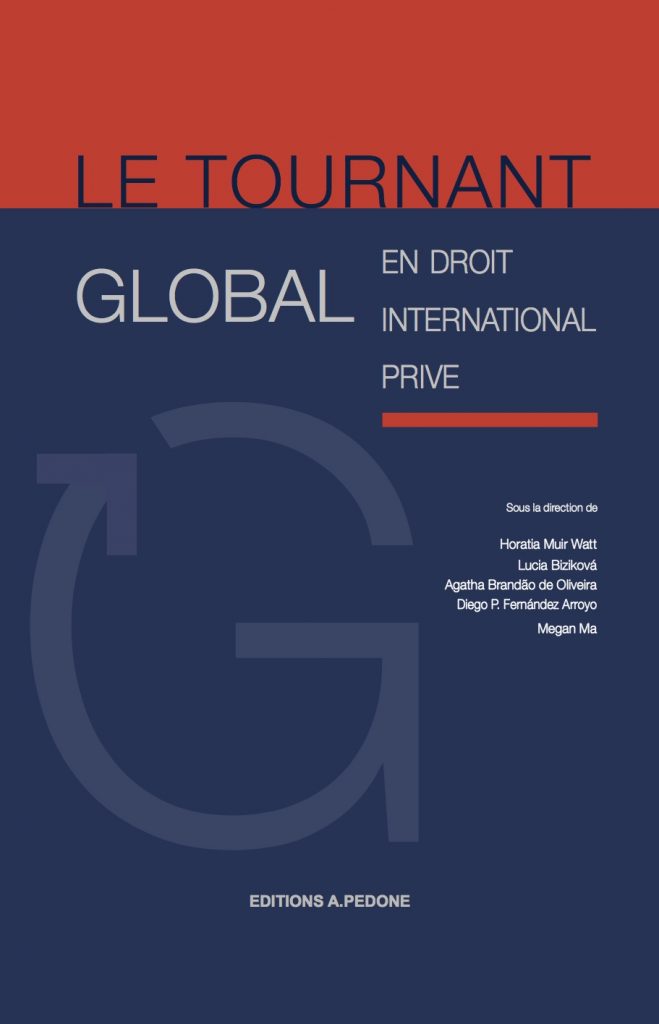
New publication: Le Tournant Global en Droit International Privé
LEPI webinar on "Law and Inequality"
"Law and Inequality" on December 7th 2020, from 5 p.m. to 7 p.m. (CET), in which Thomas Piketty and Katharina Pistor will participate and discuss their recent books.
Please find further information on this flyer.
Article "Wirecard Scandal: When All Lines of Defense Against Corporate Fraud Fail"
ECON Briefing Paper “What are the wider supervisory implications of the Wirecard case?"
Corporate Whistleblowing 2020
On Wednesday 14th October 2020 from 12:45 p.m. to 3:00 p.m. the virtual event Corporate Whistleblowing 2020 – Where We Are Today and Where We Are Going will take place (via Zoom). Katja will participate in this event as a panelist. The panel will share their expertise on corporate whistleblowing in the United States and in the European Union.
To view the recording of this webinar, please click here.
Webinar - The Future of European Capital Markets
On Tuesday 20th October 2020 from 4:00 p.m. to 5:30 p.m. (CEST - Central European Summer Time) a webinar on the The Future of European Capital Markets will take place (via Zoom). The webinar is organized by The City of London Corporation and aims to explore the future of Capital Markets Union (CMU) post Brexit and to highlight the vital role that capital markets can play in supporting the recovery from the COVID-19 crisis. Katja will participate in this event as a panelist.
Please note that a registration for this event is required. To register and to receive further information, please click here.
6th Luxembourg FinTech Conference
On Wednesday 7th October 2020 from 9:00am to 1:00pm the 6th Luxembourg FinTech Conference will take place. Katja will participate in this conference and will talk about Responsible AI Credit Scoring. You can download the corresponding working paper by clicking here.
Please find further information, especially on how to participate and about the speakers, on this flyer.
Article: "Wirecard - A scandal at the right time"
The
recently published article by Katja Langenbucher in the SAFE Finance Blog with
the title "Wirecard - A scandal at the right time" can be found here.
Current Issues in Privacy and Technology Law, Fordham Law School
From 20th to 24th July 2020 the online program of the Fordham Law School with the topic Current Issues in Privacy and Technology Law will take place (via Zoom). It will start every day at 10 a.m. and end at 12 p.m. (Eastern Time). Katja will be participating in this event as a discussion guest (leading expert).
The following topics will be covered on each day:
Day 1: Introduction to Privacy Law: Why Privacy Matters
Day 2: Big Brother: Government Surveillance Today
Day 3: Privacy and Emergent Technology
Day 4: Commercial Behavioral Tracking and Algorithmic Discrimination
Day 5: Privacy and the Pandemic
Please find further information, especially on how to participate in the online program and about the speakers, on this flyer and via the Fordham Law School.
SAFE Policy Online-Seminar: A "Game Changer" for Europe's Capital Markets?
On Thursday, July 2nd 2020 from 6:00 to 7:00 pm, the SAFE Policy Center organizes an Online-Seminar via Zoom with the topic "A "Game Changer" for Europe's Capital Markets?". In the Online-Seminar, the final report of the High Level Forum published on 10 June 2020 will be a key element. The Online-Seminar will be attended by:
Katja Langenbucher, (SAFE, Goethe University and CMU High Level Forum);
Niamh Moloney, (LSE and Bank of Ireland);
Jan Pieter Krahnen, (SAFE and Goethe University).
Please note that a registration for this event is required. To register and to receive further information, please click here.
Final report by High Level Forum on the Capital Markets Union
Katja has been a member of the EU Comission's High Level Forum on the Capital Markets Union which has published its final report today (10th June 2020). It is available here.
Panel Discussion: A New Decade for Comparative Corporate Law
On Wednesday, 10th June 2020, the High Level Forum´s Report on the Capital Market Union will be published. Thomas Wieser and Sean Berrigan will discuss the report through a live Twitter event which will start at 11 am CET.
You can access this event by clicking here. There will also be an option to ask questions. In order to do this, simply ask your questions through twitter using the #CMUlive.
Panel Discussion: A New Decade for Comparative Corporate Law
On March 26 2020 the book launch for Comparative Company Law (Oxford University Press 2019), by Carsten Gerner-Beuerle and Michael Schillig will take place at King's College London. Katja Langenbucher will take part in a featured panel discussion on 'A new decade for comparative corporate law - what can we expect for the 2020s?', drawing on some of the themes explored in the book.
Other speakers will be: Genevieve Helleringer (Oxford University and ESSEC Business School), Marc Moore (UCL), Michael Schillig (King's College London) and as Chair Carsten Gerner-Beuerle (UCL).
Conference for the Law and Economics Policy Initiative

Bok Visiting International Professors Program at PennLaw
Katja has been invited to join PennLaw as a Bok Visiting International Professor in the spring semester of 2021.
The Neuroscience and Law Center of Fordham Law School presents "Cutting Edge Developments in Neuroscience and Law" on February 25, 2020
Katja Langenbucher will moderate the first panel featuring:
Martha J. Farah, Ph.D.
Walter H. Annenberg Professor in Natural Sciences Director, Center for Neuroscience & Society University of Pennsylvania
Paul W. Glimcher, Ph.D.
Professor, Department of Neuroscience and Physiology
Professor, Department of Psychiatry NYU School of Medicine
Yasmin L. Hurd, Ph.D.
Ward-Coleman Chair of Translational Neuroscience
Director, Addiction Institute of Mount Sinai Professor, Departments of
Psychiatry, Neuroscience and
Pharmacological Sciences
Icahn School of Medicine at Mount Sinai
Adrian Raine, D.Phil.
Richard Perry University Professor Departments of Criminology,
Psychiatry, and Psychology University of Pennsylvania
Please find more information on this flyer and via the Fordham Law School.
Interim Report of the High-Level Forum on capital markets union
On 20 February 2020 the High-Level Forum published its interim report. The report, which does not put forward any specific policy proposals yet, sets out a new vision for the future of the capital markets union and will guide the work of the Forum in the coming months. Publication of the final report is due in May 2020.
Financial Regulation Conference, Wharton School, Pennsylvania
Wharton School's Financial Regulation Conference is covering regulatory reform, corporate governance, technologies and new challenges. Katja will talk about „Responsible A.I. Based Credit Scoring: A Legal Framework“ and her commenters are Rory Van Loo, Boston University and David Wishnick, Penn Law. The conference will take place on Friday, April 17, 2020.
Please find the conferece's agenda here.
Women in Finance & Law Workshop
The Foundations of Law and Finance Program is hosting a workshop on Women in Finance. Katja will be a discussant for "The New Unicorn Investors – Disruptors or Distractors?" by Anat Alon-Beck, Case Western Reserve University School of Law and take part in a panel discussion on "What Prevents Women from Reaching the Top in Finance?", together with Participants: Alexander Leisten (Country Head Germany, Fidelity International), Susan Christofferson (Rotman School of Management), Nicola Fuchs-Schündeln (Goethe University).
The event will take place on Monday, March 30 at Goethe University, House of Finance, Room E.01 “Deutsche Bank".
Please find further information on this workshop on this flyer.
PIFS/Harvard Law School Symposium On Building The Financial System Of The 21st Century
The PIFS/Harvard Law School program is hosting a symposium on how to build the financial system of the 21st century, focusing on the relationship between Europe and the United States from 5 to 7 March 2020. Katja will sit on a panel devoted to „Developing Integrated Capital Markets Within and Across Borders“, together with
- Jonathan Jachym, Head of Government Relations and Regulatory Strategy, Americas, London Stock Exchange Group
- Stephen Berger, Global Head of Government & Regulatory Policy, Citadel
- Brett Redfearn, Director of the Division of Trading and Markets, U.S. Securities and Exchange Commission.
Please find more information on the symposium on this flyer.
Capital Markets Union: More Growth for Germany and Europe
27 February 2020, 15.00 – 18.00 Association of German Banks, Burgstrasse 28, 10178 Berlin
The third Markets for Europe conference will bring together high-level representatives from politics and the economy to discuss why we need a capital markets union and what the next steps towards building a deeper CMU must be. Vice-Chancellor and Minister of Finance, Olaf Scholz, will give the key-note. The conference is chaired by Peer Steinbrück, former Minister of Finance and member of the Markets for Europe leadership.
Katja will take part in a panel on "The next steps towards building a Capital Markets Union", see the full programme here.
Digital Capital Markets in Europe – The Challenge of EU Market Integration
A conference co-organised by the University of Helsinki Faculty of Law and the Edinburgh Law School on 5th June 2020 in Helsinki will bring together leading experts from financial, corporate and banking law. Katja will participate in a panel on "Regulatory and technological innovation: Creating more efficient, sustainable and responsible EU financial markets" and give a presentation on "Responsible AI credit scoring - A Comparative Perspective on U.S. and EU Privacy and Anti-discrimination laws". Please find more information on this flyer.
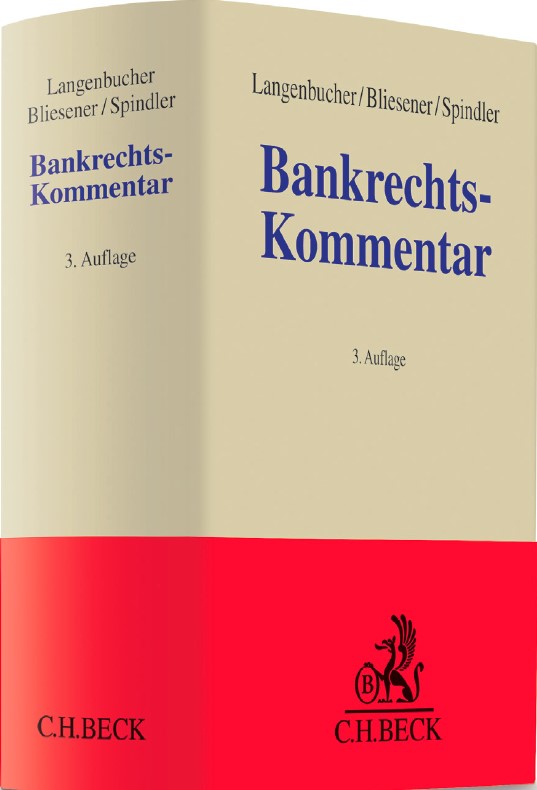
Third edition of "Bankrechts-Kommentar" forthcoming
Research group "Finances and society", SciencesPo, Paris

Katja has joined the research group "Finances et Sociétés" at SciencesPo, Paris. The group brings together a broad spectrum of disciplinary approaches such as sociology, economics, political sciences and the law. For futher information, please click here.
High Level Forum on the Capital Markets Union
Katja has been appointed to the High Level Forum on the Capital Markets Union. Building on its goal to finalise the creation of capital markets union (CMU), the Commission on 10 October 2019 launched a call for expression of interest to join a High-Level Forum (HLF) on capital markets union, with a 7 November 2019 submission deadline (see the press release of 10 October 2019).
The HLF is an expert group composed of highly experienced industry executives and top international experts and scholars to feed into the work on the future CMU policies. The group will propose targeted policy recommendations for future CMU actions, to ensure that citizens and businesses can access capital markets across the EU on equal terms and irrespective of their geographical location.
On 18 November 2019 the Commission announced the composition of the High-Level Forum, a list of its members is to be found here: List of members of the High-Level Forum. The High-Level Forum has started its work on 26 November 2019. Watch out for the interim report to be published in February!
Research group "Droit et Economie dans un Nouvelle Ère", SciencesPo, Paris.
Katja has joined the research group "Droit et Economie dans un Nouvelle Ère" at SciencesPo, Paris. Recent developments, such as the rise of big data, of large web based giants or the new challenges raised by climate change or increasing inequalities, cause an important paradigm shift in law and economics.
Such a shift raises numerous questions. Are our laws adequately addressing the new needs of our societies? How do we rethink competition law when players are growing larger and traditional measures of concentration no longer apply? Should we rethink the articulation between industrial and competition policy? How can we use our economic tools and methods to assess and design rules and regulations ? How does big data affect judicial decision making?
The creation of the group «Droit et Économie dans une nouvelle ère» aims at addressing these questions and generally treat subjects where law and economics are intertwined. It will be an interdisciplinary venture, building on the strengths of the Departement of Economics and the Law School at Sciences Po, but will ultimately involve the entire Sciences Po community. The group will be organized around 3 main themes:
- Antitrust, Industrial and innovation policy in a new era
- Big data: consumer protection, predictive justice and use of data in sentencing
- Environmental challenges: rethinking law and economics
For more information, please click here.
Watch out for the launch conference with Thomas Piketty, Katharina Pistor, Luigi Zingales and many more in June 2020.
Capital Markets Union and Beyond
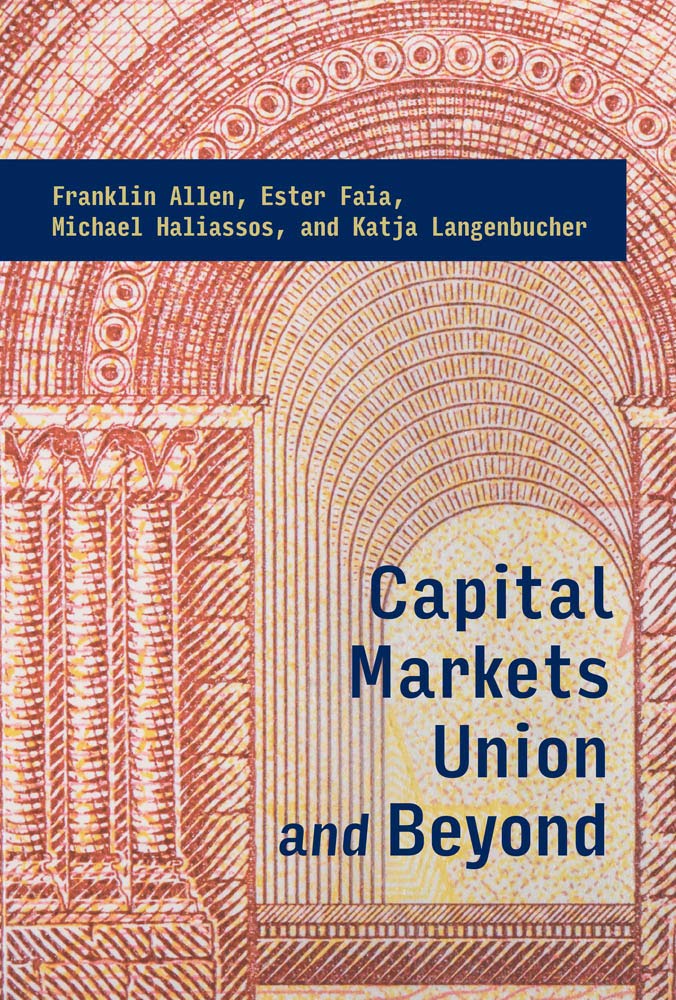
Katja is co-editor of a book on the "Capital Markets Union and Beyond", published at MIT Press in December 2019: https://mitpress.mit.edu/books/capital-markets-union-and-beyond
Experts from economics, finance, law, policy, and banking discuss the design and implementation of a future capital market union in Europe.
The plan for further development of Europe's economic and monetary union foresees the creation of a capital market union (CMU)—a single market for capital in the entire Eurozone. The need for citizens and firms of all European countries to have access to funding, together with the pressure to improve the efficiency and risk-sharing opportunities of the financial system in general, put the CMU among the top priorities on the Eurozone's agenda. In this volume, leading academics in economics, finance, and law, along with policy makers and practitioners, discuss the design and implementation of a future CMU.
Contributors describe the key design challenges of the CMU; specific opportunities and obstacles for reaching the CMU's goals of increasing the economic well-being of households and the profitability and viability of firms; the role that markets—from the latest fintech developments to traditional equity markets—can play in the future success of CMU; and the institutional framework needed for CMU in the aftermath of the global recession.
Contributors: Sumit Agarwal, Franklin Allen, Valentina Allotti, Gene Amromin, John Armour, Geert Bekaert, Itzhak Ben-David, Marcello Bianchi, Lorenzo Bini-Smaghi, Claudio Borio, Franziska Bremus, Marina Brogi, Claudia M. Buch, Giacomo Calzolari, Souphala Chomsisengphet, Luca Enriques, Douglas D. Evanoff, Ester Faia, Eilis Ferran, Jeffrey N. Gordon, Michael Haliassos, Campbell R. Harvey, Kathryn Judge, Suzanne Kalss, Valentina Lagasio, Katya Langenbucher, Christian T. Lundblad, Massimo Marchesi, Alexander Michaelides, Stefano Micossi, Emanuel Moench, Mario Nava, Giorgio Barba Navaretti, Giovanna Nicodano, Gianmarco Ottaviano, Marco Pagano, Monica Paiella, Lubos Pastor, Alain Pietrancosta, Richard Portes, Alberto Franco Pozzolo, Stephan Siegel, Wolfe-Georg Ringe, Diego Valiante.
Administrative council of BaFin
Katja has been appointed to the administrative council of BaFin. The Administrative Council monitors the management of BaFin and supports BaFin in the performance of its supervisory functions. In addition, it is responsible for deciding on the budget of BaFin, which is funded completely by the companies it supervises and is thus not covered by the federal government's budget.
BaFin's President keeps the Administrative Council regularly informed of BaFin's management activities.
The Administrative Council comprises 17 voting members. The Federal Ministry of Finance appoints six members with technical knowledge and expertise in the subject. These can be stakeholders or persons in positions in financial industry associations or supervised entities, or scientific experts. Prior to appointing a member, the Federal Ministry of Finance will consult with the financial industry associations, which are entitled to recommend three of the six members.
For further information, please click here.
Research council of the Frankfurt Institute for the History of Banking and Finance
Katja has been appointed to the research council of the Frankfurt Institute for the History of Banking and Finance, see: https://www.ibf-frankfurt.de.





- Presse & Kommunikation
- Pressemitteilungen
- Öffentliche Veranstaltungen
- Uni-Publikationen
- Aktuelles Jahrbuch
- UniReport
- Forschung Frankfurt
- Karriere & Jobs
- Frankfurter Kinder-Uni
- Zahlen und Fakten
- Internationales
- Inbound: Aus der Welt nach Frankfurt
- Outbound: Von Frankfurt in die Welt
- Erasmus / LLP
- Goethe Welcome Centre (GWC)
- Refugees / Geflüchtete
- Erasmus +
- Sprachenzentrum oder Fremdsprachen
- Goethe Research Academy for Early Career Researchers
- Forschung
- Research Support
- Wissenschaftliche Zentren
- Unser Forschungsprofil
- Forschungsförderung
- Infrastrukturzentren
- Promovierende & Postdocs